Ask three different sources what a home in Oakwood costs right now and you will get three different answers, and none of them are lying. Redfin's tracking for March 2026 put the median sale price at $397,000. A month later, Movoto's figures for the same city showed $435,000. By August, Movoto's own running numbers had drifted down to $404,000 for homes listed to buy, with price per square foot falling from where it stood a year earlier. Dayton Daily News's community data page, pulling from its own feed, lists an estimated home value near $412,000 alongside a median list price of $507,000.
That is not measurement error. It is what happens when a housing market this small gets averaged.
Same City, Four Different Numbers
Here is the spread, all reported within the same general stretch of 2026:
| Source | Time Window | Reported Figure | Days on Market |
|---|---|---|---|
| Dayton Daily News community data | 2026 snapshot | $412K estimated value, $507K median list | not reported |
| Redfin | March 2026 | $397K median sale price | 22 days |
| Movoto | April 2026 | $435K median sale price | 26 days |
| Movoto | August 2026 | $404K median list price | 35 days |
Part of the gap comes from apples and oranges. Some of these figures track homes that sold. Others track homes currently listed, which is a different and usually higher number since it reflects what sellers are asking rather than what buyers actually paid. That distinction alone explains some of the spread.
But it does not explain all of it, and the part it does not explain is the more useful part for anyone actually trying to buy or sell here.
A Market Too Small to Average Cleanly
Oakwood is not a big place. The Oakwood Historical Society's own account of the city's growth notes that most of its housing stock, more than 3,000 homes, was built during the boom years of the 1920s and 1930s, and very little vacant land has been added since. The city's zoning department is direct about what that means today. Its own description of why property maintenance and land use review matter so much reads plainly:
"particularly because of the age of our community and the fact that Oakwood is almost fully developed."
Almost fully developed is not a marketing phrase. It is a planning reality. There is not a pipeline of new subdivisions coming online to smooth out the numbers, and Oakwood's own historic district layers on a design review process, the kind that requires a Certificate of Appropriateness before significant exterior changes or new construction can proceed on many properties. Between the built-out lot supply and the review process protecting the district's character, redevelopment that would normally add fresh inventory and dilute outlier sales happens slowly, if at all.
When a market adds only a trickle of new supply and turns over a small number of existing homes each month, its median is not a stable measure of value the way it would be in a market selling hundreds of homes monthly. It is closer to a moving average made of very few data points, which means a handful of unusual sales can swing it hard in either direction.
Two Oakwoods, One Median
The other piece of the puzzle is that Oakwood is not one housing market. It is two, sitting inside the same city limits.
The western side of the city, the section closest to the Dayton Country Club, is where the largest and oldest estates sit, including Hawthorn Hill, the home Orville Wright moved into with his family in 1912 and which is now preserved as part of Dayton History. Active listings in that part of town run toward historic estates on acreage, the kind of property advertised with details like century-old construction, multiple acres, and six-figure-plus square footage. On a single recent day, active Oakwood listings ranged from a three-bedroom home near $295,000 to a home on Shroyer Road priced near $690,000, both inside the same city, both counted in the same monthly median.
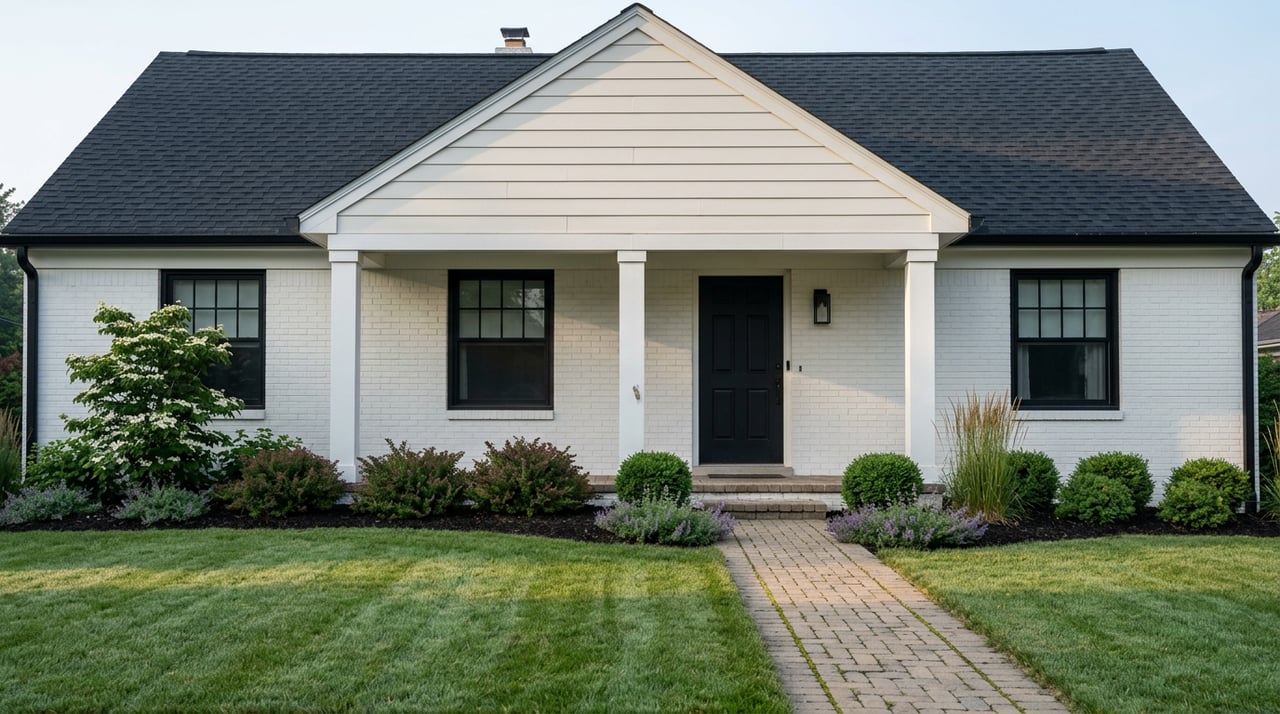
Then there is the interior of the city, where the bulk of Oakwood's housing sits: 1920s and 1930s bungalows and Cape Cods, smaller lots, more modest square footage. Some homes marketed as being in "the Oakwood area" are not actually inside Oakwood's boundaries at all. One recent listing near Dorothy Lane Market advertised itself as Oakwood-adjacent while sitting in the Kettering school district and outside Oakwood's own tax jurisdiction entirely, a detail worth catching before anyone assumes a search result reflects the city itself.
Put a handful of west-side estate sales into a given month's closing pool and the median jumps. Put a run of interior bungalow sales into the next month's pool and it drops back down. Neither move means values actually rose or fell that fast. It means the mix of what happened to sell changed.
What the Price-Per-Square-Foot Number Is Actually Telling You
This is where Redfin's own March 2026 report becomes the clearest piece of evidence, because the contradiction sits inside a single source rather than between two different ones. In that same report, the median sale price was up 8.5 percent year over year, while the median price per square foot was down 16.8 percent over the same period.
Those two numbers cannot both describe the same houses getting more valuable. If prices were genuinely rising, price per square foot should be rising too, or at least holding steady. Instead, the dollar figure went up while the per-foot figure went down, which is the signature of a market where bigger homes sold relative to the prior year, not one where the same size of home is commanding more money. Movoto's own August 2026 figures pointed the same direction, showing price per square foot down about 2 percent from a year earlier.
None of this means Oakwood is losing value. It means the headline dollar figure, on its own, cannot tell you whether the market moved or whether the mix of what sold simply changed for a month or two. In a market this size, both things look identical from the outside unless you know to check the second number.
What This Means If You're Actually Buying or Selling Here
- Treat the citywide median as a description of last month's closings, not a forecast or a valuation tool for your specific home.
- Ask what sold to produce whatever number you're looking at. A single Country Club-adjacent estate closing can pull a monthly median up by tens of thousands of dollars in a market this thin.
- Compare price per square foot within your specific pocket of the city, not the citywide figure, since the east side and west side are functionally different markets sharing one zip code.
- Confirm the boundary. If a listing advertises itself as Oakwood but the school district or tax jurisdiction says otherwise, that home is competing in a different market than the one the headline numbers describe.
- Expect days-on-market figures to bounce around for the same reason. Twenty-two days one month and thirty-five the next in a market this size often reflects which specific homes were on offer, not a citywide shift in buyer urgency.
A Few Questions Worth Asking Before You Trust Any Number
Does a falling price per square foot mean Oakwood home values are dropping? Not necessarily. It can mean the mix of homes that sold shifted toward larger properties, which raises the total price while lowering the price per square foot. The two figures answer different questions, and in a market this small, they can point in opposite directions during the same reporting period without contradicting each other.
Why do days-on-market numbers vary so much between sources? Different platforms pull from different snapshots and sometimes different definitions of the Oakwood market itself. With well under a hundred sales happening across an entire year, the timing of even one or two fast or slow sales can move the average noticeably.
Is now a good time to buy or sell in Oakwood? That depends far less on the citywide median than on what is happening on your specific street, in your specific size range, this specific month. A conversation grounded in actual recent comps in your pocket of the city will tell you more than any aggregated number will.
Oakwood rewards buyers and sellers who look past the headline. If you are trying to figure out what your home is actually worth, or what a specific Oakwood street is really commanding right now, Kevin Johnson has spent decades reading exactly this kind of market. Schedule a free consultation and get a read on the numbers that actually apply to your situation, not just the ones a website happened to average this month.