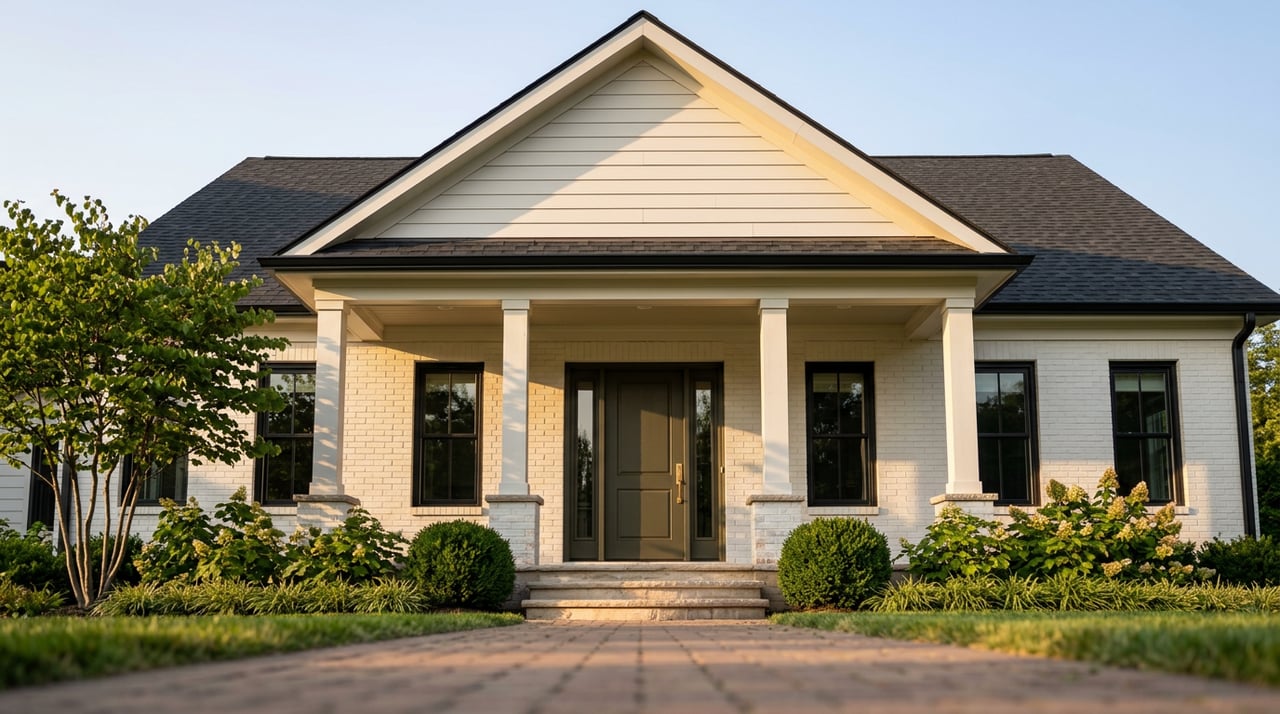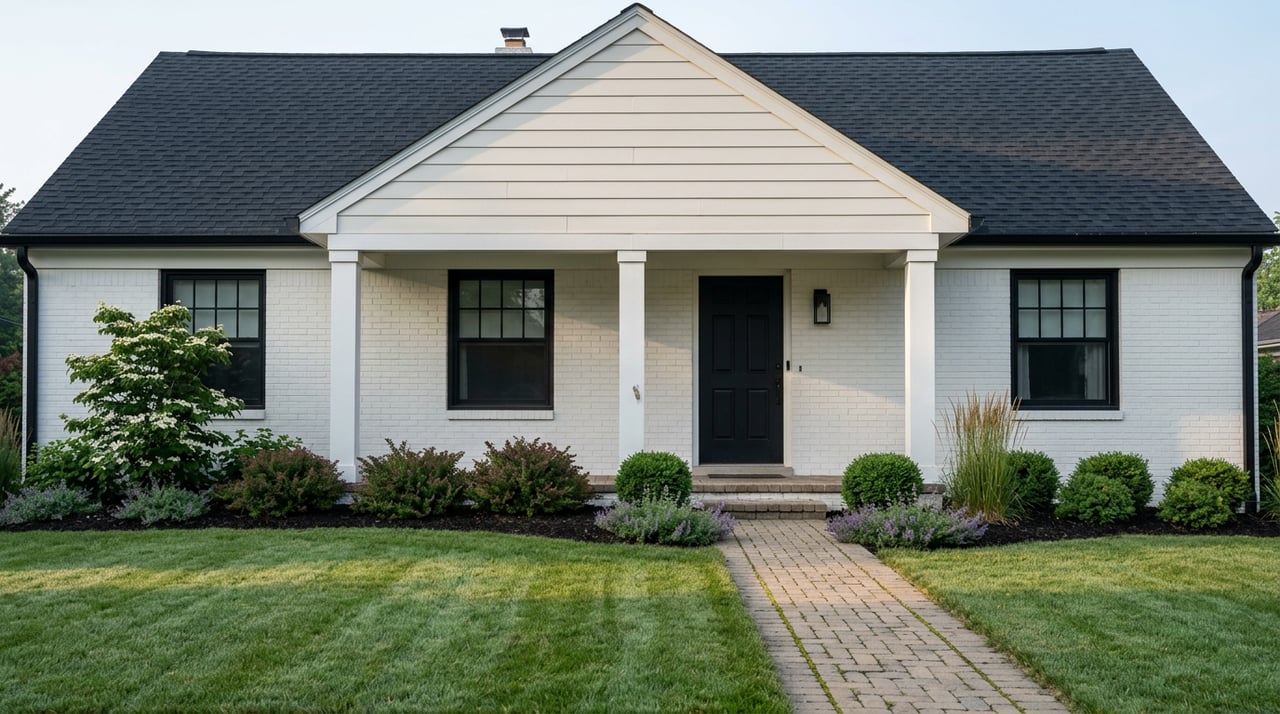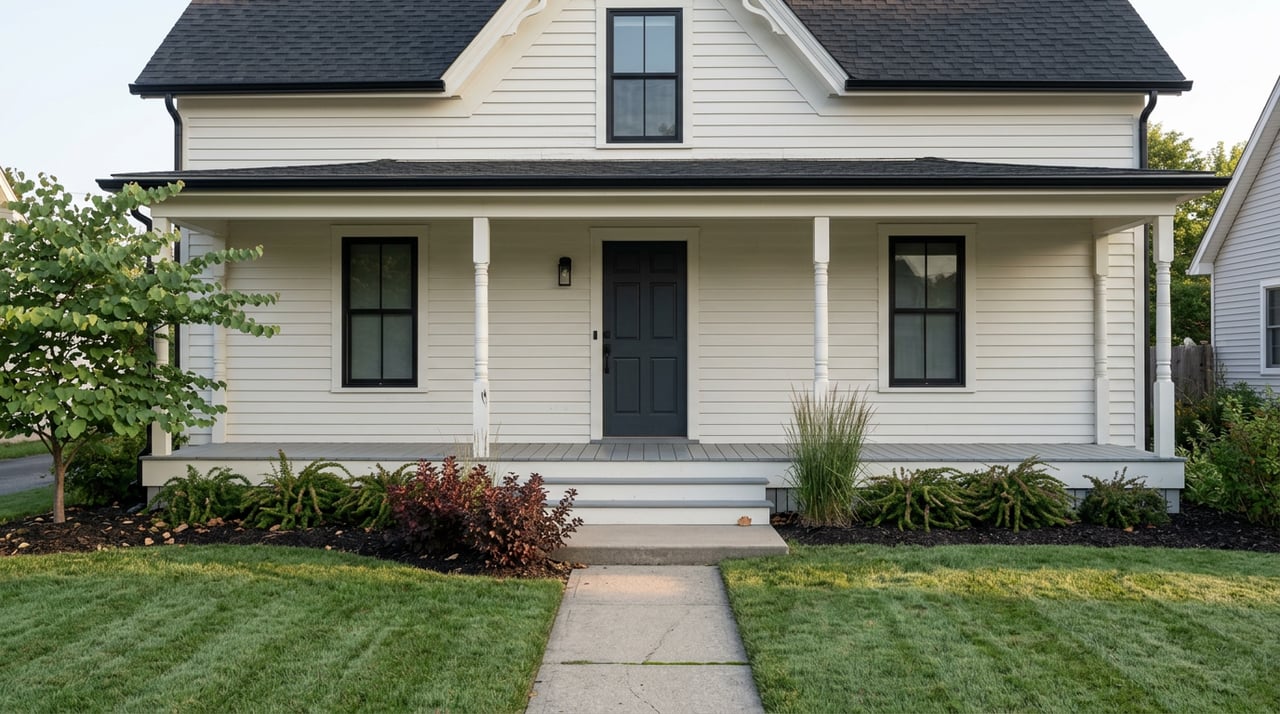
A buyer touring a two-story on West Water Street falls for it fast. Original trim, a deep front porch, the kind of woodwork nobody bothers replicating anymore. Then the listing agent mentions, almost in passing, that the porch railing can't just be swapped for something off the shelf at a big box store. Any exterior change needs a look from the city's Planning Commission first, because the house sits inside Troy's Historic District.
That single sentence changes the math for a lot of buyers. It also explains something the price alone never will.
The Boundary Nobody Mentions Until You're Under Contract
Troy's Historic District isn't a marketing label. It's a mapped boundary that runs along the Great Miami River to the north, Clay Street to the east, Canal Street to the south, and Oxford Street to the west, tracing the original perimeter of the city from 1807, when Ohio named Troy the seat of Miami County. Everything inside that line carries a layer of oversight that homes a half mile away simply don't.
Because Troy's Central Business District sits inside that same boundary, the city's own Revitalize Troy program materials spell out the mechanism plainly: any project in the overlap needs Planning Commission approval for compliance with the historic design standards before work can start. That authority doesn't stop at the storefronts. It follows the district line, which means a homeowner replacing windows, resizing a porch, or adding a fence inside the boundary is working under the same review structure as the shop owners on Main Street.
Nationally, most local historic commissions lean on the same reference point when they evaluate a proposed change: the Secretary of the Interior's Standards for Rehabilitation, the federal benchmark most local design review boards use to judge whether new work fits the old building. It's not a rubber stamp process, and it's not meant to freeze a house in amber. It's meant to keep new work from erasing what made the property worth preserving in the first place.
None of this shows up in a listing photo. It shows up the first time a buyer wants to change something.
What That Friction Buys You at the Price
Here's where the numbers start to make sense.
As of mid-August 2026, homes matching the historic district and vintage filters in Troy carry a median list price near $310,000. Citywide, across every subdivision and every build year, Troy's median list price for the same month sits at $375,000. That's a real gap, and it isn't random. It's the price of the paperwork.
Compare that to what's selling in the newer parts of town. Listings in Stanfield Place, Emerson Crossing, and Willow Creek show up regularly in current Troy inventory, all newer construction with vaulted ceilings, attached garages, and no design review standing between an owner and a new roofline. Buyers there are paying for a blank slate. Buyers in the historic core are paying less for a house, and more in process, if they ever want to touch the outside of it.
| Historic Downtown Core | Newer Subdivisions (Stanfield Place, Emerson Crossing, Willow Creek) | |
|---|---|---|
| Median list price (mid-August 2026) | ~$310,000 | Closer to citywide median of $375,000 |
| Exterior changes | Require Planning Commission review under historic design standards | Governed by standard zoning and building permit only |
| Typical age of housing stock | Victorian and early-1900s vintage | Post-2000 construction |
| Time on market (mid-August 2026 snapshot) | About 21 days | Citywide median 53 days |
That last row is the detail worth sitting with. Homes carrying the extra layer of process are moving faster than the citywide average, not slower. If the review requirement were scaring buyers off, you'd expect the opposite. Instead it looks like buyers already understand the trade. They're not avoiding the paperwork. They're pricing it in and buying anyway, often faster than everyone else.
Then the City Put $12 Million Into the Same Four Blocks
The historic district discount didn't happen in a vacuum. Part of what's kept prices lower downtown is genuinely old infrastructure, including stormwater lines more than a century old running beneath Main and Market Streets. That's not a cosmetic problem, and it's not one a buyer can fix with a coat of paint.
The city is fixing it now. Troy's Downtown Safety and Streetscape Renovation Project, authorized for bidding in the spring of 2026 at a construction cost near $12 million, covers Main Street between Cherry and Mulberry, Market Street between Franklin and Water, and a full rebuild of Prouty Plaza on the Public Square. The scope includes new brick pavers, updated lighting, digital kiosks in each quadrant, changes to how traffic moves through the roundabout, and underground utility replacement that will finally let downtown buildings install fire suppression systems. None of it is funded by outside grants. It's coming entirely out of the city's Capital Improvement Fund, Stormwater Fund, and Water Fund.
Construction is scheduled to begin this summer and run through late fall of 2027.
The plaza redesign itself went through years of public back and forth before landing here. When early concepts leaned harder into hardscape and less into green space, residents pushed back hard enough that the city dropped a proposed water feature entirely by August 2025. One council member put the concern plainly during a February 2025 council session:
"Where's the grass? A lot of people have gotten used to the grass."
That's not a footnote. It's evidence that the people who live and work inside this boundary have real leverage over what gets built in it, which matters if you're weighing whether a neighborhood is the kind that listens to the people already there.
Why the Timing Matters for Buyers Comparing Neighborhoods
Here's the part that changes how a buyer should read the current price gap.
The discount on historic-district homes reflects yesterday's infrastructure problem: aging utilities, tighter regulatory process, a downtown that needed investment it hadn't yet received. That problem is being addressed directly, on a public timeline, with public money, starting now. A buyer purchasing into the historic core today is buying into a four-block area that will look and function differently by late 2027, with new pavers, better lighting, working fire suppression in commercial buildings, and a redesigned public square built around what residents actually said they wanted.
In the short term, that means living with construction. Roundabout traffic patterns will shift. Parking near the Public Square will be reconfigured before the dust settles. That's a real cost, and it's fair to weigh it against the savings on the purchase price.
In the longer term, it's a rare case where a specific, dated, funded public investment is landing in the exact pocket of the market that currently trades at a discount. Whether that gap narrows once the project wraps in 2027 is not something anyone can promise. But it's the kind of detail a buyer comparing a $310,000 historic-district listing against a $375,000 new-build subdivision house should have in hand before deciding which trade they're actually making.
A few things worth doing before writing an offer on a house inside the boundary:
- Call Troy's Planning Department before you fall in love with a renovation plan. Ask specifically what triggers review and what doesn't.
- Expect parking and traffic pattern changes near Main, Market, and the Public Square through late 2027.
- Ask whether the property's utility connections are part of the current infrastructure replacement, since that answer affects both near-term disruption and long-term maintenance costs.
A Couple of Questions Worth Asking Directly
Does the design review only apply to homes right on the Public Square? No. The boundary runs the full historic perimeter, from the Miami River to Clay, Canal, and Oxford Streets. A house several blocks from downtown can still fall inside the line.
Will construction make the historic district less desirable while it's underway? Short term, it will mean more noise and some parking shuffling near the work zones through late 2027. Whether that outweighs the long-term upside of the investment is exactly the kind of trade-off worth working through with someone who knows the district block by block, not just the price per square foot.
If you're weighing a historic Troy property against something newer on the edge of town, the spreadsheet only tells you half the story. The other half is process, timing, and what a four-block construction project is likely to mean between now and late 2027, and for the years the rebuilt plaza will serve after that. Kevin Johnson has spent decades walking Miami Valley buyers through exactly this kind of decision. Schedule a Free Consultation and get the full picture before you write an offer.